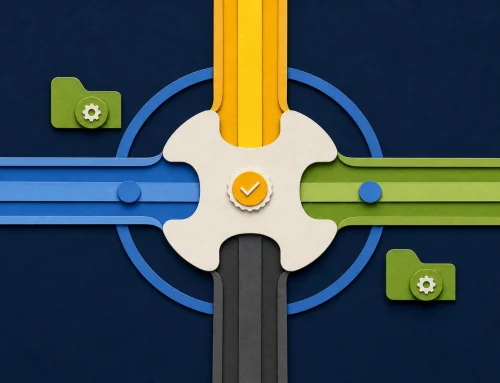
A privacy-network publication begins long before a server answers a request. Someone has to shape the idea, choose a presentation, prepare the files, review what will become public, and decide how the finished work will be operated. Within the Invisible-Internet ecosystem, Darknet Now represents that creation and publishing layer.
That description is grounded in the project’s source-controlled legacy application. Darknet Now was conceived as more than a landing page or a route into Tor or I2P. Its code brings together template-driven page creation, a visual editor and an original source-oriented editor, file management, uploads, and optional community modules. Those capabilities reveal the project’s original ambition: give an operator one workspace in which an idea could become a managed publication.
This is a profile of that intent and of what the project could become through careful modernization. It is not a claim that every legacy feature is available today, and it does not treat privacy-network software as an anonymity guarantee.
A Publishing Workspace, Not Just a Network Route
Tor and I2P solve important network problems, but neither network writes an article, prepares an image, chooses a site structure, or decides when a draft is ready. A Tor onion service connects an onion identity and virtual port to an operator-controlled application. I2P provides its own destinations and tunnels for applications that run above the network layer. In both cases, the publisher remains responsible for the application, content, access rules, service keys, updates, and recovery plan.
Darknet Now’s original design started on the other side of that boundary. It offered template sets from which an operator could create pages, while also allowing an empty HTML page for work that did not fit a template. The presence of both a visual editing path and an original editor points to two different kinds of author: someone who wanted guided composition and someone who needed direct control over the source.
That combination matters. Privacy-network publishing is often described as if configuring a route were the whole job. In practice, publication is a chain of decisions: what to say, how to organize it, which files to include, who may change it, how readers confirm its address, and what happens when the material is corrected or retired. Darknet Now is best understood as an attempt to make the creation half of that chain visible.
The live Darknet Now project page still presents the project as a website-building environment. The source provides the more useful detail: this was a publishing workspace with distinct creation, editing, file, and community surfaces. That evidence is stronger than broad marketing language because it shows the kinds of work the application was built to coordinate.
From Template to Managed Publication
A template-driven workflow gives an operator a repeatable starting point. Shared layouts and graphics can establish page structure before an author adds project-specific material. A blank-page option preserves an escape hatch for specialized documents, while visual and source editing let the operator choose the appropriate level of control. Together, those paths support an important publishing principle: make the routine work easy without hiding the underlying document.
The legacy application also included a file manager and upload controls. That turns page editing into a broader content workflow. Images, downloadable documents, styles, and other assets have to be named, placed, reviewed, and eventually removed. Upload rules, image dimensions, storage limits, file renaming, subdirectories, and permissions all appear in the code. They show that Darknet Now treated files as part of the publication rather than as an afterthought.
Community and utility modules extended the idea further. Message boards, calendars, counters, mail-related forms, and other optional elements were designed to sit beside ordinary pages. Their value is not that every publication should enable them. It is that the platform recognized several publication models: a mostly static site, a project with reader contact, a small community space, or a site with scheduled activity.
Each interactive module also changes the operator’s responsibilities. A message board introduces moderation, retention, account, and abuse-handling questions. A contact form introduces delivery, spam, and data-minimization decisions. Uploads introduce validation and malware risk. A calendar can disclose timing or operational patterns. The correct lesson from the original breadth is not “turn everything on.” It is “choose the smallest set of modules that serves the publication, then own their consequences.”
Operator ownership is the thread running through the whole workflow. The operator owns the canonical source, decides who may edit it, approves what becomes public, protects the network identity, and maintains a path to restore or retire the site. A hosting provider can supply infrastructure and support, but it cannot silently assume editorial authority. Likewise, a directory may help readers find a publication without becoming its source of truth.
Publishing to a Privacy Network Changes the Review
A privacy-network route does not make unsafe content safe. Before publication, documents and images still need a metadata review. Themes, fonts, embeds, analytics, update checks, and remote media can still create unexpected clearnet requests. Error pages can reveal software details. Administrator names, reused accounts, contact addresses, and writing habits can connect a publication to identities the operator meant to keep separate.
The review also needs a reader-side test. A site that works locally may fail through its intended network because of addressing, proxy, application, or asset-loading assumptions. Someone other than the person who configured the service should confirm the announced address, navigate the main path, open representative files, and watch for broken or third-party resources. The result should be recorded as a release check, not remembered as an informal success.
Address distribution deserves its own decision. A Tor onion address or I2P destination may be shared directly with a known audience, announced through an authenticated channel, listed in a directory, paired with a clearnet explanation, or exposed through an intermediary access route. Those choices affect reach, correlation, trust, and maintenance differently. Discovery Without Default Exposure explains why publishing and promotion should not be collapsed into one automatic step.
This boundary also prevents exaggerated promises. A privacy-network publication may reduce particular exposure paths when it is designed and operated well. It does not guarantee anonymity, eliminate application vulnerabilities, or make every reader route equivalent. The publisher should state what the chosen setup does, name important limitations, and avoid borrowing certainty from the network’s reputation.
How Darknet Now Fits—and How It Could Evolve
The ecosystem roles become clearer when they are arranged as handoffs. Invisible-Internet provides the trust, infrastructure, and support layer. Darknet Now focuses on creating and preparing the publication. Darknet Proxy begins after a destination exists, exploring records, categories, reviews, and optional access paths. The projects can inform one another without sharing a database, identity, or promise.
A modern Darknet Now would not need to reproduce the legacy interface screen for screen. It could preserve the useful model while separating responsibilities more cleanly:
- Structured creation: reusable templates, accessible content patterns, and a clear choice between visual composition and source editing.
- Controlled assets: file validation, metadata inspection, image processing, quotas, and an inventory of every public dependency.
- Reviewable releases: draft, preview, approval, publish, correction, and retirement states with an auditable owner for each handoff.
- Optional modules: forms or community features installed only when their moderation, privacy, and maintenance requirements are accepted.
- Network adapters: publication to operator-controlled Tor or I2P endpoints without placing service keys or private configuration inside the content editor.
- Portable ownership: exportable source and assets, documented backups, and a recovery path that does not depend on one interface remaining available forever.
That modernization path would turn the project’s broad legacy feature set into a smaller collection of explicit, composable tools. It would also make the central promise more honest: Darknet Now can help an operator prepare and manage a publication, while the operator remains responsible for its content, network choices, and lifecycle.
Practical Takeaway
Before building a privacy-network site, create a one-page publication brief. Record the purpose, intended audience, canonical content owner, approved editors, content types, interactive features, and information that must never become public. Decide whether the first release needs a template-driven site, a static export, or an interactive application.
Then make a release record with the selected network route, verified address, announcement channel, backup location, administrative owner, correction path, monitoring check, and retirement procedure. Do not put service keys, passwords, or other secrets in that record.
Finally, treat discovery as a separate approval. Direct sharing, a directory listing, a clearnet counterpart, and an intermediary gateway are different doors. Open only the doors the intended audience needs, and assign someone to keep every approved address and description current.
Darknet Now’s enduring idea is straightforward: private-network publishing needs a creation layer with real editorial and operational ownership. The network route matters, but the quality and safety of the publication are built before that route goes live—and maintained long after the first successful request.
Sources and Further Reading
- Invisible-Internet: Company Project Spotlights and Our Ecosystem
- Invisible-Internet Docs: How the Invisible-Internet Services Work Together
- Invisible-Internet Article: Start With a Threat Model, Not a Tool List
- Invisible-Internet Article: Darknet Proxy—The Discovery and Access Layer
- Tor Project: Onion Services Overview
- Tor Project: Set Up Your Onion Service
- I2P Project: Introduction to I2P
- I2P Project: Getting Started