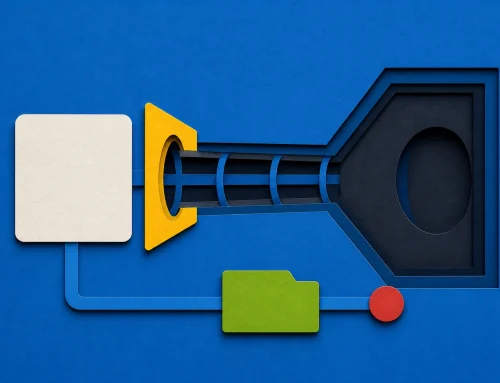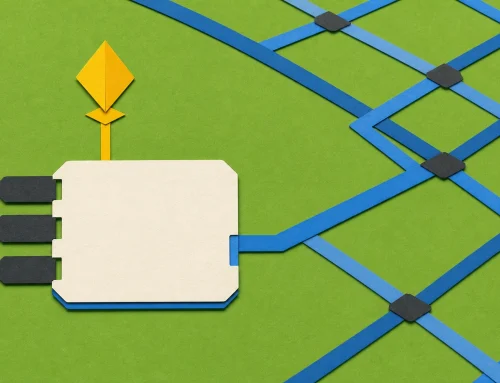
Invisible-Internet is the coordinating company in an ecosystem of focused experiments. Its role is not to make every property behave like one large product. It is to provide the trust, hosting, support, and process layer that lets privacy-first publishing work be discussed and operated with clearer responsibilities.
That distinction matters because privacy networks already involve several kinds of trust. A publisher trusts software, administrators, service identities, backups, announcement channels, and the people who answer when something breaks. A reader trusts an address source, an access route, and the description attached to a destination. The ecosystem is easier to understand when each part states which relationship it serves—and which promises it does not make.
Trust Begins With a Clear Operating Role
Invisible-Internet’s core role is the durable operating layer: configured hosting, human support, documented boundaries, and a process for moving from setup to handoff. The public services guide describes the company as the hosting and support layer, with related services supporting publishing, discovery, and access where available. The Company page places the naming and education questions in connected I2P experiments. That is a division of work, not a claim that one company controls the Tor or I2P networks.
Hosting joins an application to selected privacy-network routes and gives the operator a management path. Support helps identify whether a problem belongs to the server, application, network route, account, or another layer. Process makes responsibilities visible: what is included, who owns updates and content, how a handoff is verified, and where a problem should be reported. The companion article What “Configured Hidden-Service Hosting” Actually Means explains why bringing up software is only one part of that system.
Trust here should not be read as a guarantee of anonymity, uninterrupted reachability, or immunity from compromise. Tor and I2P protect particular network relationships; neither can erase identifying content, unsafe administration, vulnerable applications, or careless account reuse. A provider earns practical trust by describing limits honestly, protecting the access it controls, preserving recoverable state, and giving operators enough information to make their own decisions.
This is also why human support remains part of infrastructure. An alert can say that a process stopped. It cannot always explain whether an address changed, a local application failed, a network route is delayed, or a publishing decision created a new dependency. A useful support path narrows the problem without pretending to own every layer.
The operating layer should preserve useful handoff evidence without exposing secrets. A record can name the selected routes, public addresses, local application endpoints, backup scope, monitoring checks, and responsible owners. It should never place private service keys or credentials in ordinary support notes. That baseline helps a future operator understand what was intentionally built and makes each later change reviewable instead of relying on one person’s memory.
Connected Experiments, Separate Responsibilities
The five connected experiments give recurring questions a distinct place. They share a family resemblance and may link to common documentation, but each is an editorial and product lens rather than evidence that every imagined service is live. Keeping their roles separate makes the ecosystem legible:
- Darknet Now explores the creation and publishing path: how an idea becomes a prepared, network-aware publication that can be maintained after release.
- Darknet Proxy explores discovery and access: directories, reviews, optional visibility, and routes that may help a reader find or reach a destination.
- I2P.me uses a concise identity to explain I2P destinations, human-readable naming, address distribution, and the trust involved in resolving a name.
- I2P.us provides a regional educational lens without implying that a distributed network is a centralized geographic service or that traffic stays in one country.
- I2P.mobi asks how I2P concepts can be explained for smaller screens and mobile threat models without presenting an experimental identity as a finished app.
These boundaries mirror distinctions inside the networks themselves. I2P documentation separates routers from application destinations and keeps human-readable naming outside the communication layer. Tor onion services likewise connect a service identity and network route to an application the operator still has to secure and maintain. Publishing, naming, routing, discovery, and support interact, but they are not interchangeable.
A project may use only part of the ecosystem. An operator could use Invisible-Internet hosting and distribute an address directly, with no directory or proxy listing. Another project might publish elsewhere but use educational material to plan an I2P name or a mobile-friendly onboarding page. Optional discovery should remain an informed choice, as Discovery Without Default Exposure explains. Connection should make paths easier to understand, not turn every experiment into a compulsory bundle.
Why Boundaries Make the Whole System Stronger
A clear boundary reduces false assumptions. If hosting and discovery are treated as the same service, a publisher may believe that buying infrastructure automatically creates an audience—or that declining promotion makes a public endpoint secret. If a gateway is described as native network access, readers may misunderstand which intermediary handles their request. If a memorable name is confused with the underlying cryptographic destination, an outdated or untrusted mapping can look more authoritative than it is.
Boundaries also improve incident response. When reachability fails, an operator can test the local application, the privacy-network route, the service identity, and the announcement channel separately. When a listing is wrong, its correction does not require rebuilding the hosted site. When a publishing workflow changes, discovery records can be updated deliberately rather than silently drifting out of date.
The same structure helps editorial and policy review. A hosting problem can be handled as an infrastructure issue, an incorrect directory description as a listing issue, and a disputed article as a publishing issue, each through the appropriate process. That does not eliminate overlap, but it prevents an intermediary from being casually described as the author, host, or network operator when its actual role is narrower. Accurate role descriptions support better decisions by customers, readers, support staff, and reviewers.
Separation supports privacy as well. Every added connection can reveal context: that two names belong together, that a hidden service has a clearnet counterpart, that one organization operates several properties, or that a mobile and desktop audience share an address. Those links may be intentional and useful. The important step is to decide them with a threat model instead of allowing convenience to create them by default. Start With a Threat Model, Not a Tool List offers a practical framework for that decision.
Finally, boundaries keep claims reviewable. Each property can state its present role, availability, policies, and limitations without borrowing promises from another property. The company can improve one lane while preserving the others, and readers can tell whether they are reading about a current service, an educational resource, or an experiment. That precision is a stronger basis for trust than a single oversized promise.
Practical Takeaway
Map a privacy-first publication as a set of named responsibilities. Identify who provides the host, who maintains the application, which network route carries readers, how the address is verified, where discovery occurs, and who responds when any one of those parts fails. Leave a role blank when the project does not need it.
Then ask three questions before connecting another ecosystem path:
- What new job does this connection perform? Publishing, naming, discovery, access, support, and education should have distinct purposes.
- What trust or exposure changes? Record the intermediary, the information it sees, and any identities the connection makes easier to correlate.
- How can the connection be removed or corrected? Assign an owner for stale listings, address changes, broken routes, and outdated explanations.
Invisible-Internet’s ecosystem is best understood as coordinated lanes, not a promise that every road is required or already complete. Start with the operating layer the project needs, add the experiments that answer a real question, and keep every boundary visible to publishers and readers.
Sources and Further Reading
- Invisible-Internet: Company and Our Ecosystem
- Invisible-Internet Docs: How the Invisible-Internet Services Work Together
- Invisible-Internet Docs: What Configured Hidden-Service Hosting Means
- Invisible-Internet Docs: Darknet Proxy Visibility and Reviews
- I2P Project: Introduction to I2P Architecture and Operation
- I2P Project: Naming and Address Book
- Tor Project: Set Up Your Onion Service
- Tor Project: Onionsite Checklist